Your research deserves a clearer digital home.

Eastern Flux is a digital research portfolio service for individual wildlife researchers, conservation scientists and academics. One page that brings your background, themes, publications and projects together, with every link pointing back to the original source.

See the sample portfolio Request a founding pilot place

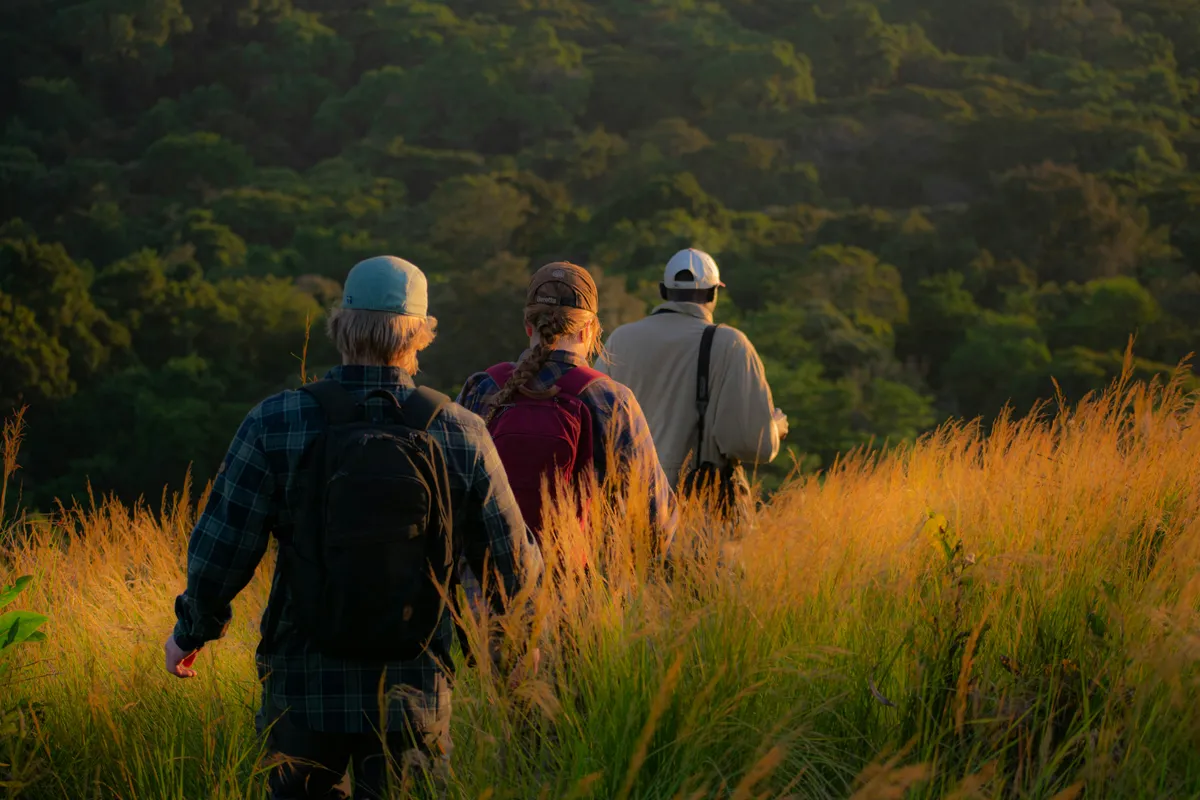
Three researchers walking through tall grass toward a forested reserve at sunrise
Field team walking toward a forest reserve at first light. Photo: Brian Kungu via Unsplash.

Wildlife research Conservation science Academic work

Your work is in six places. A reader needs it in one.

Your publications sit on journal sites. Your interests live on a university page. Your talks are buried in conference programmes, and your projects sit on project pages. A reader who wants the full picture of your work must chase it across all of them.

A portfolio complements ORCID, Google Scholar, journal pages and institutional profiles. It gives a reader a front door to them.

Scattered research records converging on one portfolio Six labelled boxes on the left, named Journal site, University profile, Conference programme, Project page, Repository and Scholar profile, with lines converging into one larger box on the right labelled Your portfolio. Journal site University profile Conference programme Project page Repository Scholar profile Your portfolio one reader, one page
Six scattered records, one front door. Diagram by Eastern Flux.

Who this is for

Early-career
You have your first publications, field seasons and interests, but no clear professional home for them yet. A portfolio presents your early record with the same care as an established one, so supervisors, collaborators and funders see organised work from the start.
Established academic
Your publications, projects and outreach sit across many platforms, and keeping them aligned takes time you do not have. A portfolio gathers the public record into one maintained page that points back to every original source.
Independent or practitioner
You publish reports or field studies without a university profile behind you. A portfolio gives your work a stable address, your methods a clear record, and your readers a direct route to everything you have produced.

What you get

What is a digital research portfolio? It is one personal page that brings your biography, themes, publications and projects together, with every link pointing back to the original source.

  1. Professional biography A concise account of your background, written from your information and approved by you.
  2. Research themes Your interests grouped into clear themes a reader can follow across your work.
  3. Selected publications with source links Your chosen papers and reports, each linking back to the publisher page or repository.
  4. Projects and fieldwork A limited number of project summaries with dates, roles, funders and field sites.
  5. Teaching, outreach and conservation contributions Modules, talks and guides that show how your work reaches students and communities.
  6. Links to your institutional and scholarly profiles Direct routes to your ORCID, Google Scholar, university page and related profiles.
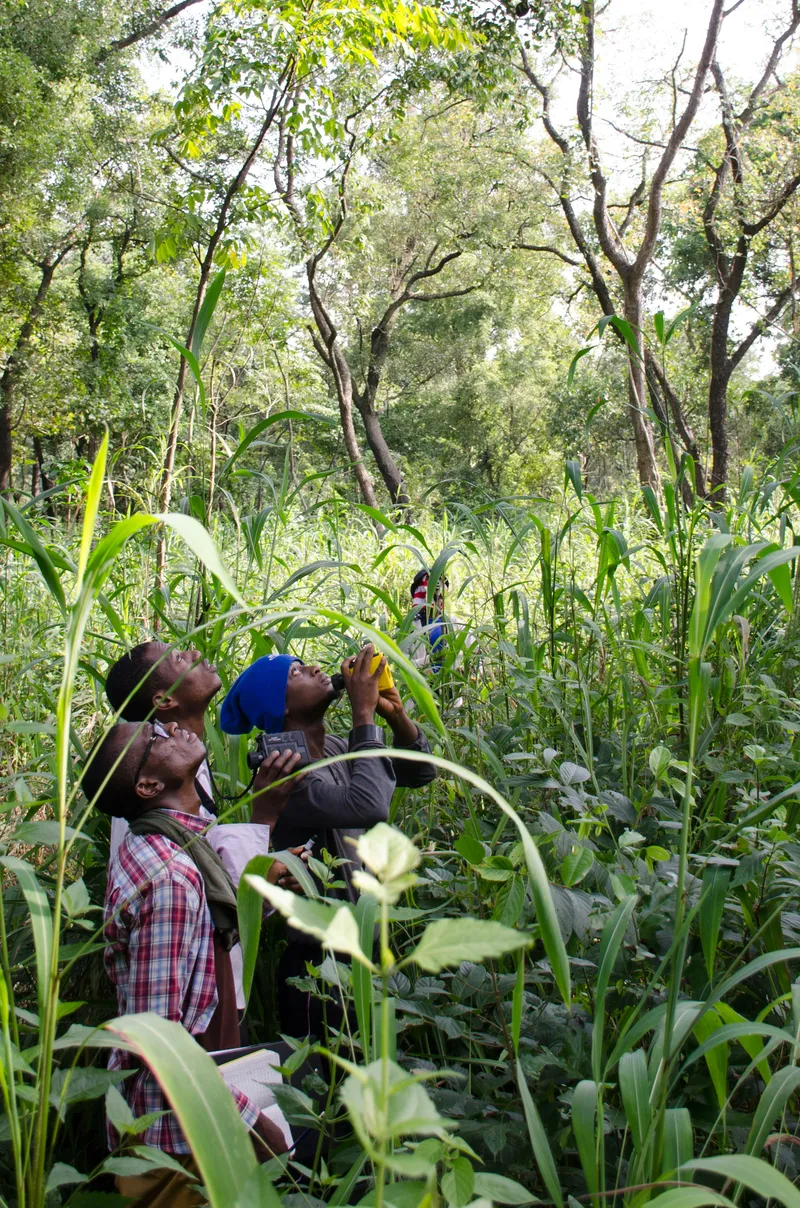
Three field researchers in tall grass observing the forest canopy with binoculars and a camera
Canopy observation during a field survey. Photo: Alexander Shenkin via Unsplash.

What stays under your control

Accuracy is the trust signal. Nothing is published without your approval.

Every title, author order, date, identifier and affiliation is checked against reliable sources. You approve the final biography, publication selection and affiliations before launch.

Photographs and materials are used only with permission. Your record stays yours, and the page reflects exactly what you signed off.

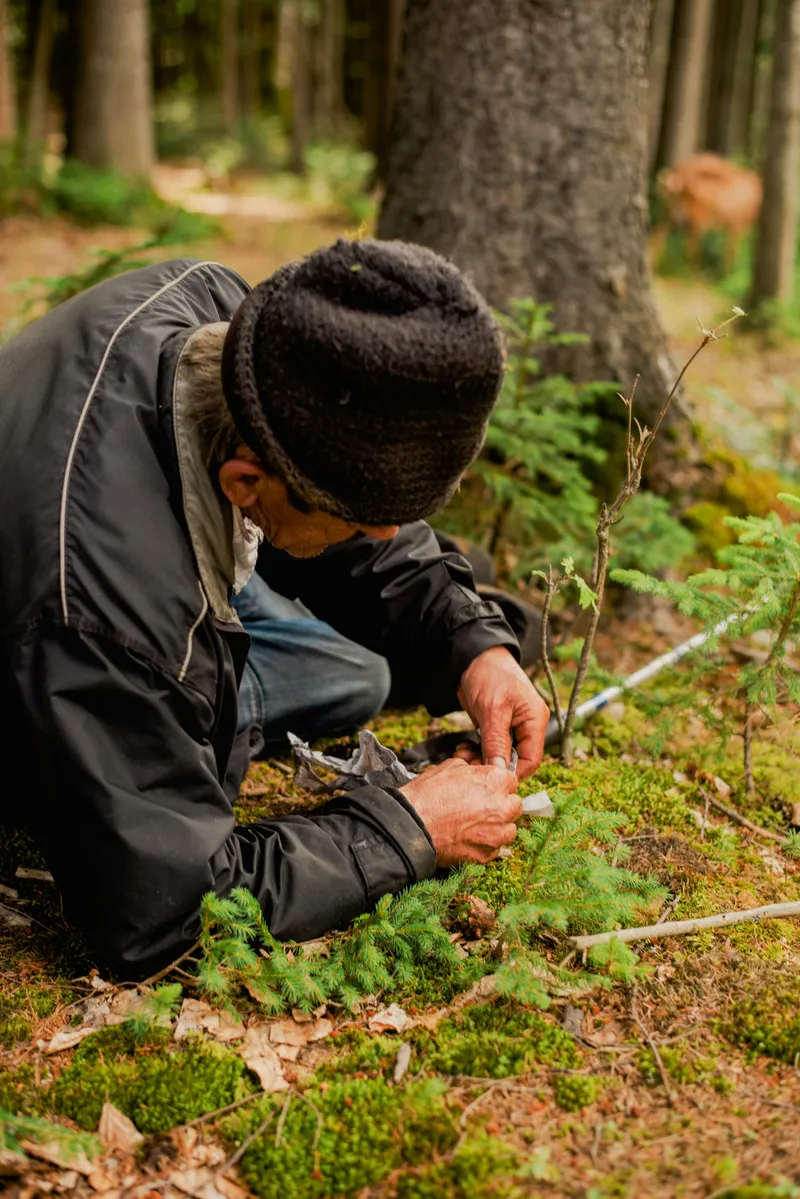
A researcher kneeling on a forest floor closely examining a seedling and moss
Close examination on the forest floor, the standard for every record. Photo: Eugenia Pan via Unsplash.

Sample portfolio

This is a complete demonstration portfolio for a sample researcher. It shows the structure, tone and verification standard your own page would receive. Every name, institution and publication here is invented.

Sample portfolio. Not a client project.

Researcher record, ref AEL-001

Dr. Amara Eze-Lindqvist

Senior Lecturer in Wildlife Ecology, Department of Forest and Wildlife Studies, Lowland Forest University

Dr. Amara Eze-Lindqvist is a rainforest wildlife ecologist studying how fragmented forest shapes primate and pangolin populations in West Africa. Her work combines camera-trap surveys with community-based monitoring, training local observers to record wildlife alongside researchers. She teaches wildlife ecology and supervises postgraduate field projects at Lowland Forest University. Her current research focuses on forest corridors that connect isolated reserves and on practical methods that communities can use to track wildlife recovery.

Biography approved by the researcher before launch

Research themes

  1. Theme 1 Species occupancy in fragmented rainforest Camera-trap surveys that record which primates and pangolins persist in forest fragments, and how patch size and corridor links shape their presence.
  2. Theme 2 Human and wildlife interactions around forest reserves Field studies along reserve boundaries that document crop visits, local attitudes and practical measures that reduce tension between farms and forest.
  3. Theme 3 Community-based wildlife monitoring Training and field guides that help local observers collect reliable records, so monitoring continues between formal research visits.

Interests grouped into three readable themes

Selected publications

  1. Primate occupancy across fragments of the Okwa Forest Reserve

    Eze-Lindqvist, A., Bello, S. and Hart, M.

    First author / 2026 / Journal of West African Conservation Ecology / DOI 10.0000/demo.2026.008

    Species occupancy in fragmented rainforest

    Camera-trap records show which primate groups persist in small fragments and which depend on corridor links to larger blocks.

    Publisher page (demonstration)
  2. Pangolin detection rates in logged and unlogged forest plots

    Eze-Lindqvist, A. and Osei, D.

    First author and corresponding author / 2024 / Tropical Wildlife Monitoring Letters / DOI 10.0000/demo.2024.007

    Species occupancy in fragmented rainforest

    Paired plots suggest pangolins return to lightly logged areas once understorey cover recovers and snaring pressure falls.

    Publisher page (demonstration)
  3. A field guide to tracks and signs for local observers

    Lowland Forest Wildlife Group

    Co-author, field guide / 2024 / Community Wildlife Handbook Series / DOI 10.0000/demo.2024.006

    Community-based wildlife monitoring

    An illustrated guide that trained observers carry on patrols to record tracks, feeding signs and calls with consistent codes.

    Publisher page (demonstration)
  4. Crop visits by forest mammals along the Ibere Corridor boundary

    Hart, M., Eze-Lindqvist, A. and Bello, S.

    Co-author / 2023 / Journal of West African Conservation Ecology / DOI 10.0000/demo.2023.005

    Human and wildlife interactions around forest reserves

    Farm interviews and night surveys map where crop visits cluster and which deterrents farmers rate as practical.

    Publisher page (demonstration)
  5. Training local observers for camera-trap surveys: a pilot protocol

    Eze-Lindqvist, A., Mensah, K. and Osei, D.

    First author and corresponding author / 2022 / Tropical Wildlife Monitoring Letters / DOI 10.0000/demo.2022.004

    Community-based wildlife monitoring

    A six-week training protocol raised species identification accuracy among new observers from low baselines to survey standard.

    Publisher page (demonstration)
  6. Attitudes toward forest reserves in three corridor villages

    Bello, S. and Eze-Lindqvist, A.

    Co-author / 2021 / Conservation and Communities Review / DOI 10.0000/demo.2021.003

    Human and wildlife interactions around forest reserves

    Survey responses link support for reserve rules to visible benefits such as paid monitoring work and clear boundary marking.

    Publisher page (demonstration)
  7. Corridor use by duikers between Okwa fragments

    Osei, D., Eze-Lindqvist, A., Hart, M. and Bello, S.

    Co-author / 2020 / Tropical Wildlife Monitoring Letters / DOI 10.0000/demo.2020.002

    Species occupancy in fragmented rainforest

    Marked transects record regular duiker movement through narrow corridors that planners had classed as too degraded to matter.

    Publisher page (demonstration)
  8. Baseline survey of mammals in the Ibere Corridor: project report

    Lowland Forest Wildlife Group

    Co-author, project report / 2019 / Lowland Forest Wildlife Reports / DOI 10.0000/demo.2019.001

    Species occupancy in fragmented rainforest

    The first systematic mammal list for the corridor, compiled from traps, transects and interviews with reserve staff.

    Publisher page (demonstration)
Publications grouped by research theme

Each link points to the publisher or repository

Author role stated plainly

Projects and fieldwork

Fieldwork sites: Okwa Forest Reserve and the Ibere Corridor

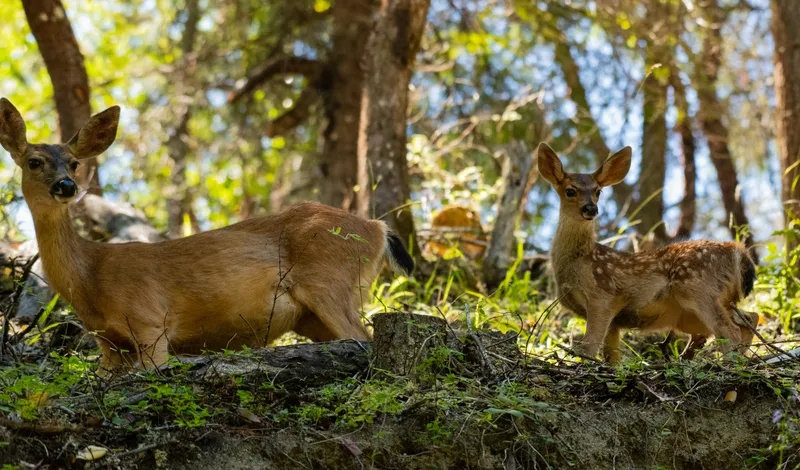
A doe and fawn standing in dappled forest light, illustrating the type of wildlife recorded on survey
Forest mammals of the type recorded on survey. Okwa Forest Reserve. Photo: John Yunker via Unsplash.

Camera-trap occupancy survey, Okwa fragments

2023 to 2025 / Principal investigator / Funded by Meridian Field Science Fund

Sixty camera stations across nine fragments recorded primates, pangolins and duikers over eighteen months. The survey underpins two publications and a shared dataset held by the university.

Community monitoring pilot with local observers

2021 to 2023 / Project lead / Funded by Corridor Communities Trust

Fourteen trained observers collected patrol records around two corridor villages. The pilot produced the field guide and the observer protocol now used in teaching.

Human and wildlife interaction study, reserve boundary

2019 to 2021 / Co-investigator / Funded by Westshore Conservation Grants

Farm interviews and night surveys along the Ibere boundary mapped crop visit patterns. Findings fed into village meetings on deterrents and boundary marking.

Projects show dates, role and funder

Teaching, outreach and contributions

  • Teaching module: Field Methods in Wildlife Ecology A second-year undergraduate module covering transects, camera traps and data sheets, with assessed field practicals in the university forest plot.
  • Public talk: Counting animals that hide An evening lecture for a natural history society on how camera traps and local knowledge reveal nocturnal forest mammals.
  • Field guide for local observers A short illustrated guide to tracks, feeding signs and calls, written with observers and revised after two seasons of patrol use.

Outreach recorded alongside papers

How the process works

  1. Discovery

    A short conversation about your work, your goals and the materials you hold. Eastern Flux confirms the scope of your portfolio and states what it needs from you.

  2. Onboarding

    You share your curriculum vitae, publication list, profile links and any photographs or project materials you hold the rights to use. Everything is logged against its source.

  3. Verification

    Every title, author order, date, identifier and affiliation is checked against reliable sources such as publisher pages and repositories. Anything uncertain is flagged for your decision.

  4. Structure

    Your biography, themes, publications, projects and contributions are organised into clear sections with plain summaries. You confirm the selection and the emphasis before any page is built.

  5. Build

    Your portfolio page is built as a fast, mobile-friendly page with accessible text and basic metadata for search and social sharing. Every publication link points back to its original source.

  6. Review

    You receive one preview and up to two revision rounds. Corrections to text, dates, affiliations and layout are made, and you sign off the final page before it goes live.

  7. Launch and handover

    The page is published and handed over with its accounts, files and records. Ownership and update terms follow what was agreed in your quote, so the handover is complete.

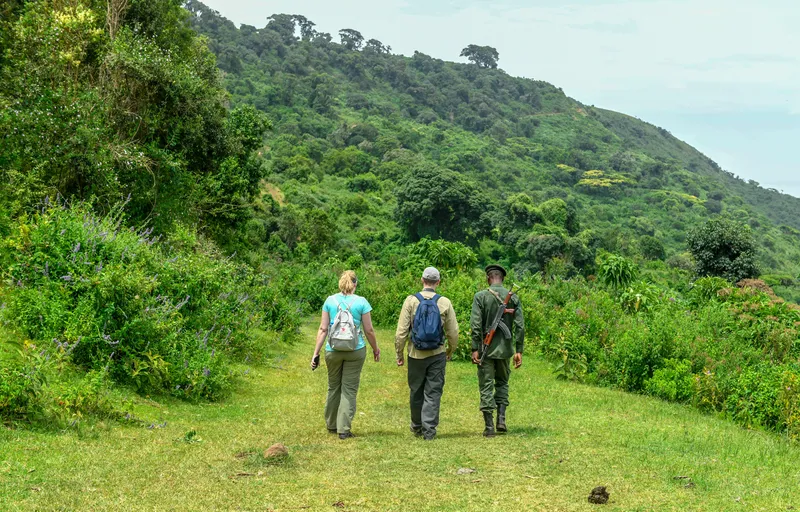
Two researchers walking with a reserve ranger along a path toward a forested hill
Walking a reserve boundary with field staff. Photo: Samwel Nsyuka via Unsplash.

What is included and what is outside the scope

Included

  • One personalised mobile-friendly portfolio page with structured sections
  • Professional biography written from your information
  • Research interests and themes
  • A selected publication list with source links
  • A limited number of project summaries or contributions
  • Links to institutional and scholarly profiles
  • Basic page metadata and a social-sharing preview
  • One preview, up to two revision rounds, and launch handover

Outside the scope

  • New scientific research or writing papers
  • Rewriting publications as original work
  • Guaranteed search rankings, citations, funding, collaborations or jobs
  • Unlimited revisions or ongoing content updates
  • Databases, interactive research maps, custom search or full laboratory websites
  • Domain, hosting and paid software fees unless stated in your quote

Founding pilot

The Founding Pilot is a limited-scope Individual Research Portfolio for early customers who will give feedback on the process.

Places are limited while the service is refined. Prices are confirmed after a short conversation about scope. Feedback is requested, a testimonial is never required, and any public case study needs your written permission.

Request a quote

Questions, answered

What is a digital research portfolio?

A digital research portfolio is one personal web page that presents your professional biography, research themes, selected publications, projects and contributions in a clear structure. It links each publication back to its original source. It gives readers, collaborators and funders a single front door to your work.

How is it different from a university profile, ORCID or Google Scholar?

A portfolio complements those platforms. University pages, ORCID and Google Scholar store verified records across many systems. Your portfolio gathers the public story in one readable place and points every claim back to those records. It adds biography, themes and context that identifier databases were never built to hold.

Who is it for?

It is built for individual wildlife researchers, conservation scientists and academics at any career stage. Early-career researchers gain a professional home for first publications and fieldwork. Established academics gather scattered profiles into one page. Independent researchers and practitioners present reports and field studies without needing a university site.

What do I need to provide?

You provide your curriculum vitae or publication list, a short account of your background and themes, links to your existing profiles, and any photographs or project materials you hold the rights to use. Eastern Flux works from reliable sources and checks each detail with you. You approve the final text before launch.

How long does it take?

Timelines depend on the size of your publication list and how quickly your materials arrive. Once all sources are available, most portfolios move from discovery to launch within a small number of weeks. Your quote states the delivery window for your scope, so you know the schedule before work begins.

How many revisions are included?

Each portfolio includes one preview and up to two revision rounds before launch. This covers corrections to text, author order, dates, affiliations and layout. Structural changes beyond the agreed scope are quoted separately. You sign off the final page, so the published record matches your approval.

Will it improve my citations or search rankings?

No guarantees are made about citations, rankings, funding, collaborations or jobs. A clearer page makes your work easier to find and understand, and basic metadata helps search engines read it correctly. The value is presentation and accuracy, and any promise beyond that would be dishonest.

Do I own the portfolio and the domain?

Ownership is agreed in your quote before work begins. The page content, your biography and your materials remain yours, and domain and hosting accounts are arranged in your name wherever possible. Your quote states the exact handover terms, so ownership is clear before launch.

Can I update it later?

Updates after launch are quoted separately unless your quote includes them. Small corrections, new publications and new projects can be added on request. Each update follows the same verification and approval routine as the original build, so the page stays accurate as your record grows.

How do you check my publication details?

Every title, author order, date, identifier and affiliation is checked against reliable sources such as publisher pages, repositories and your institutional profile. Anything uncertain is flagged for you to confirm. You approve the final biography, publication selection and affiliations before the page goes live.

How much does it cost?

The Individual Research Portfolio is currently offered as a Founding Pilot with quote-based pricing. Prices are confirmed after a short conversation about your scope, including publications, projects and materials. There are no published tiers. Request a quote through the enquiry form to start that conversation.

About Eastern Flux

Eastern Flux is a digital research portfolio service for individual wildlife researchers, conservation scientists and academics.

Eastern Flux is a new service. It is developing its process with the research community, and early pilots help shape it. There is no back catalogue of clients to show yet, so this site shows a demonstration portfolio instead.

Eastern Flux was founded by Siyanbola Surprise, a graduate of the Federal University of Technology, Akure, in Ecotourism and Wildlife Management. The undergraduate project examined how different substrates affect the growth rate of cultured oyster mushrooms. The founder's interests include conservation, biodiversity, forest protection, wetland conservation and ecotourism.

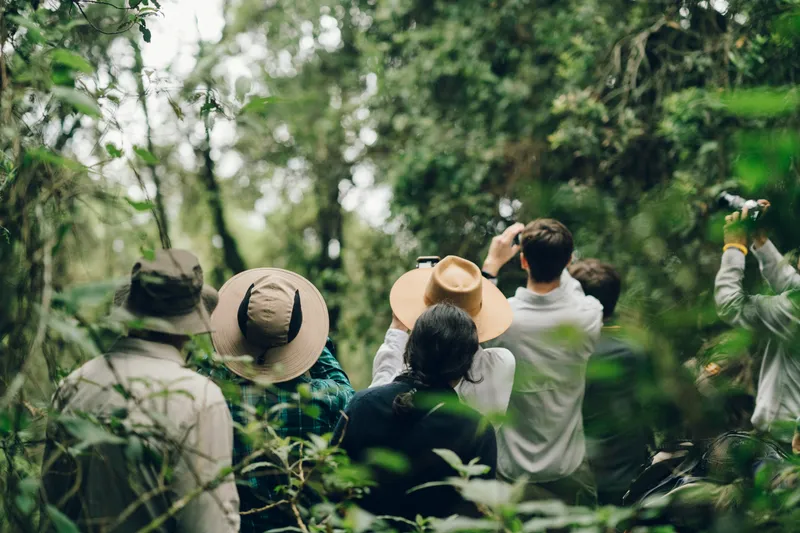
A group of people in hats photographing wildlife in dense forest
Group observation in dense forest. Photo: Random Institute via Unsplash.
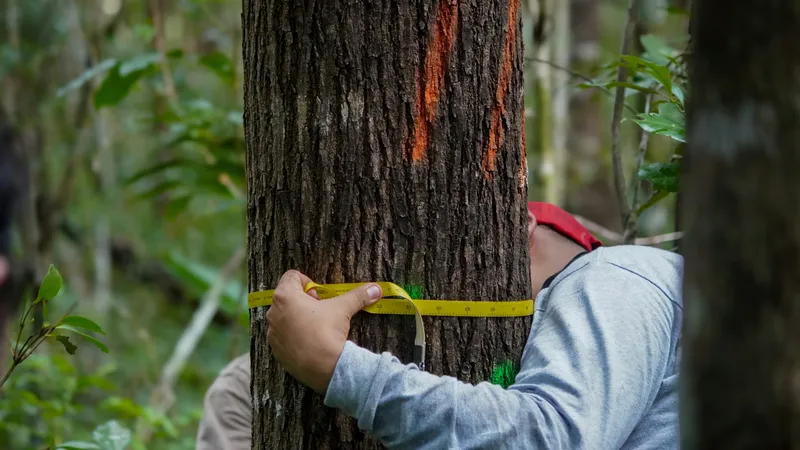
Hands wrapping a yellow measuring tape around a marked tree trunk in forest
Measuring a marked stem on a forest plot. Photo: Guille B. via Unsplash.

Enquire

Tell Eastern Flux about your work and what you want your portfolio to do. Every enquiry receives a personal reply.